


Romania has just been handed one of the most humiliating bills of the post-pandemic era. A Brussels court ruled on March 31 that the country must honour its obligations under the 2021 EU vaccine contract with Pfizer and BioNTech, leaving Bucharest exposed to roughly €600 million in costs for doses it no longer wanted to receive. This is not a minor legal setback. It is a brutal reminder of what happens when political vanity, bureaucratic incompetence and zero accountability collide at the top of the state.
A costly ruling with political consequences
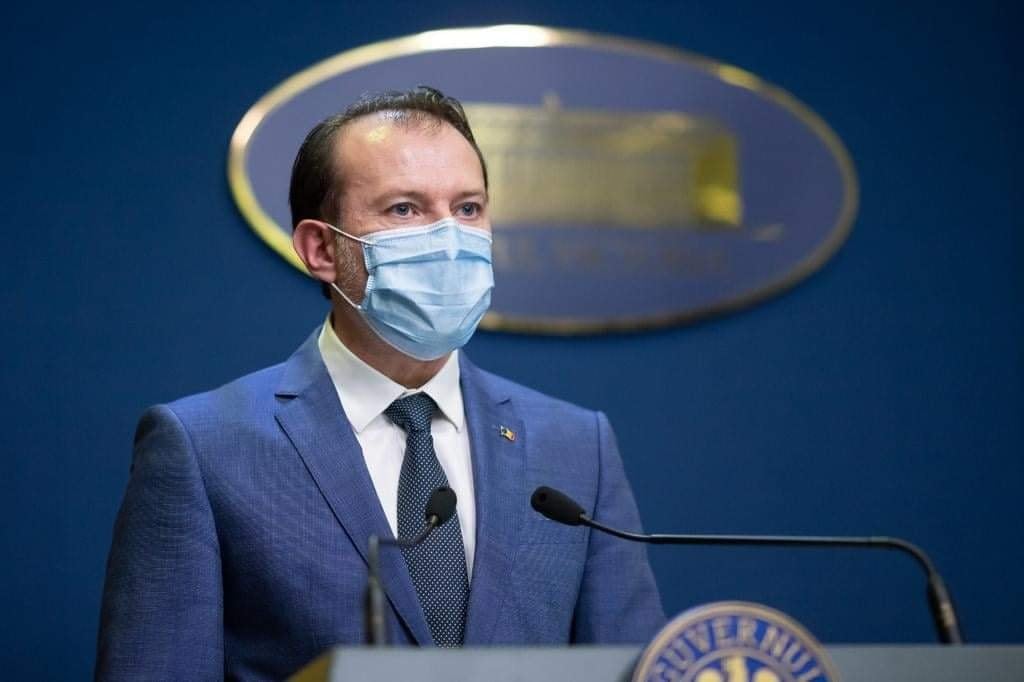
This is not simply a story about vaccines. It is a story about negligent governance. In 2021, when these commitments were made, Florin Cîțu was Romania’s prime minister. His government operated amid a panic-driven procurement climate, but panic is not a legal defence, and political theatre is not a procurement strategy.
Contracts worth enormous sums were accepted in the name of urgency, yet the state later behaved as if it could walk away when the political mood changed, and the public health reality shifted. The Brussels court has now made clear that this was fantasy, not policy.
The bill for incompetence: Romania signed first and thought later

Romania’s argument was essentially that circumstances had changed. Demand fell. The pandemic evolved. The war in Ukraine disrupted priorities. Pfizer’s market behaviour was questioned. None of that was enough.
The judges rejected the country’s position and treated the agreement as binding, with no unilateral escape hatch that Bucharest could invoke after the fact. In plain terms, Romania signed first, failed to think ahead, and then discovered too late that international contracts are not campaign slogans.
That is where the political scandal really begins. Governments are supposed to assess downside risk before committing public money on this scale. They are supposed to understand volume risk, timing risk, storage risk, demand collapse, legal exposure and the terms of exit. If Romania ended up trapped between surplus supply and a binding payment obligation, that points to failure at the level of judgment, negotiation or both.
The problem is not that officials were forced to make hard decisions in a crisis. The problem is that they made decisions with the recklessness of people who assumed no one would ever come back to pay the invoice.
And that invoice is not symbolic. Around €600 million is not abstract money. It is public money from a country that has spent years claiming it lacks fiscal room for hospitals, schools, infrastructure and serious state reform. Romanians are now being told, in effect, that the state may have to pay hundreds of millions for doses it did not use because the people in charge were incapable of matching emergency procurement with long-term responsibility.
That is not bad luck. That is administrative malpractice dressed up as crisis management.
The Cîțu government cannot hide behind the pandemic
The defenders of the old authorities will say everyone made mistakes during the pandemic. That is true, but it is also a convenient refuge. Not every mistake produces a court-enforced liability of this scale. Not every mistake survives because the underlying contract was apparently handled so badly that the state had no viable way out once demand collapsed.
Romania is not being punished for hindsight. It is being punished for the quality of the decisions made by those who were entrusted with power when it mattered most.
The Florin Cîțu era was full of performative confidence and inflated rhetoric about competence, reform and modern governance. What remains from that period is a familiar Romanian pattern: loud political branding on the surface, weak statecraft underneath. The same establishment that spoke in the language of responsibility now leaves behind a possible €600 million burden tied to a procurement fiasco it either failed to understand or failed to control.
Accountability should start now
Pfizer, from its perspective, sees the matter in simple terms: contracts were signed, obligations were fixed, and states cannot simply refuse delivery when the economics become politically inconvenient. That logic may be cold, but it is coherent. What is incoherent is the behaviour of governments that commit taxpayer money on a massive scale and then act surprised when courts enforce the contract.
Romania can still appeal, and the legal battle may continue for months or years. But the political verdict is already in. This was a failure of state judgment.
A serious country would now demand names, decisions, signatures, internal warnings and a full chain of responsibility. Who approved the volumes? Who assessed the legal exposure? Who believed Romania could later wriggle out. Who failed to protect the public purse?
Until those questions are answered, this case will stand as yet another monument to elite negligence in Bucharest: expensive, avoidable and paid for by everyone else.

