

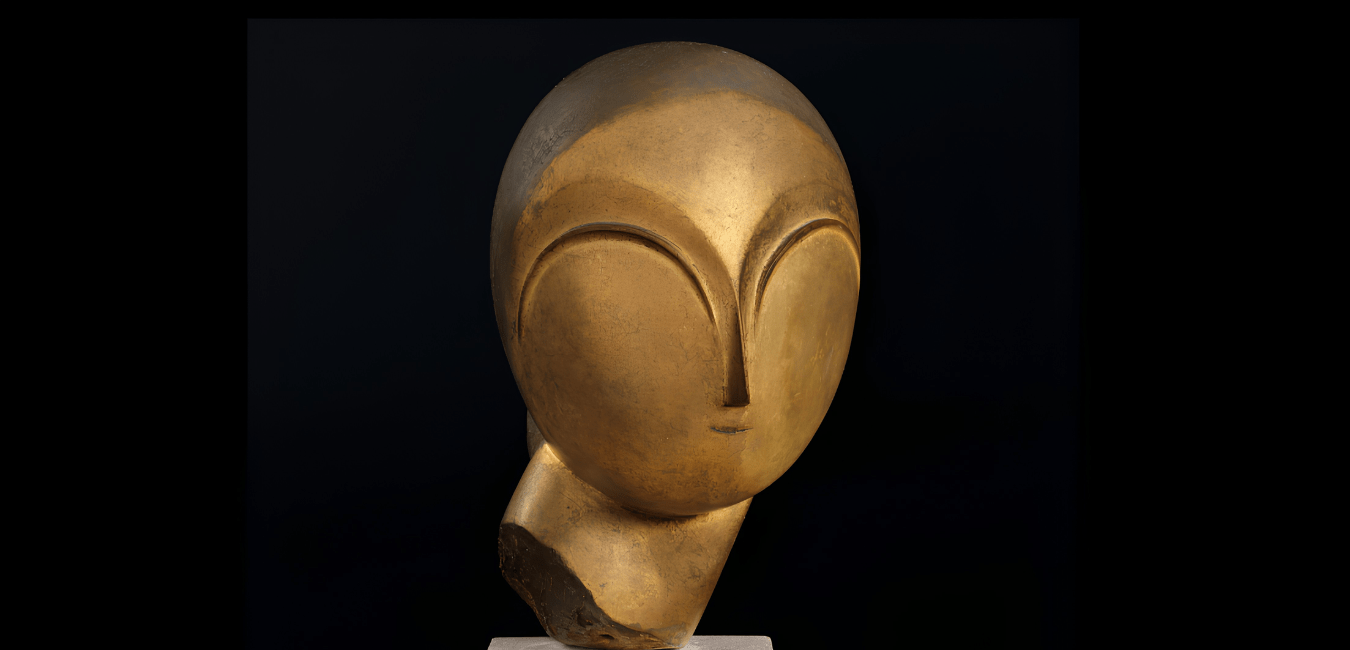
Constantin Brâncuși’s Danaïde sold for USD 107.6 million at Christie’s in New York, setting a new auction record for the Romanian-born sculptor and placing one of his most refined works among the most expensive sculptures ever sold publicly.
The sculpture, created in 1913, was hammered down at USD 93 million. With buyer’s fees included, the final price reached USD 107.6 million, above the pre-sale estimate of around USD 100 million.
The result confirms Brâncuși’s position not only as one of the defining figures of modern sculpture, but also as one of the most valuable artists in the global art market.
A New Record for Brâncuși
The sale marks the highest auction price ever achieved by a work by Brâncuși. His previous auction record stood at USD 71.2 million, reached in 2018 by La jeune fille sophistiquée.
Danaïde had been one of the headline works in Christie’s spring auctions and was presented publicly in New York before the sale. The work drew significant attention from collectors, art specialists and the wider public, especially after being included in a high-profile promotional campaign by Christie’s.
The final price also confirms the continuing strength of the market for rare modernist masterpieces, at a time when major collectors are again competing aggressively for trophy works with strong provenance.
The Sculpture Came From the Newhouse Collection
Danaïde belonged to the collection of S. I. Newhouse Jr., the former media magnate and Condé Nast publisher, who was regarded as one of the most important American collectors of modern and contemporary art.
The Christie’s auction also included other major works from the Newhouse collection, including a Jackson Pollock painting that sold for USD 181.2 million. The evening produced several major records and signalled renewed confidence at the very top of the international art market.
For Brâncuși, however, the sale carried a different type of significance. It placed a compact, highly distilled sculpture by the Romanian master in the same financial conversation as monumental works by the biggest names in twentieth-century art.
Why Danaïde Matters
Danaïde is a bronze head with gold leaf, made in 1913, during one of the most important periods in Brâncuși’s artistic development. The work reflects his move away from literal representation and towards essential form, reducing the human figure to a serene, concentrated image of line, curve and volume.
The title refers to the Danaids from Greek mythology, the daughters condemned in the underworld to fill leaking vessels for eternity. Brâncuși’s interpretation does not illustrate the myth directly. Instead, the sculpture transforms the subject into a quiet, almost timeless presence.
This is precisely why the work is so important. Danaïde is valuable not only because it is rare or because it bears Brâncuși’s name. It represents the core of his artistic revolution: the attempt to strip away detail and arrive at the essence of form.
A Romanian Name at the Centre of the Global Art Market
For Romania, the sale is another reminder that Brâncuși remains the country’s most internationally recognised artistic figure. His works are treated not as regional cultural artefacts, but as central pieces in the history of modern art.
The USD 107.6 million result gives Romanian cultural heritage another major moment of global visibility. It also comes amid a period of renewed attention to Brâncuși, as Romania has designated 2026 as the year dedicated to the sculptor’s 150th birth anniversary.
There is an obvious irony in the fact that Brâncuși, who spent much of his creative life in Paris and became a universal figure of modernism, continues to serve as one of Romania’s most powerful cultural exports. His market value now reflects what art history had already established: Brâncuși is not a peripheral name, but one of the artists who changed the language of sculpture.
A Small Work With a Monumental Price
Danaïde is not monumental in size, but its auction result was monumental in effect. The sculpture’s price shows how the art market values not only scale but also rarity, provenance, historical importance, and a work’s ability to represent an entire artistic breakthrough.
In that sense, the Christie’s sale was more than a spectacular financial result. It was a public confirmation of Brâncuși’s place among the few artists whose best works are now treated as irreplaceable global assets.
For Romania, the message is simple: one of its greatest cultural figures has once again entered world headlines, not through commemoration, but through the hard numbers of the international art market.

