

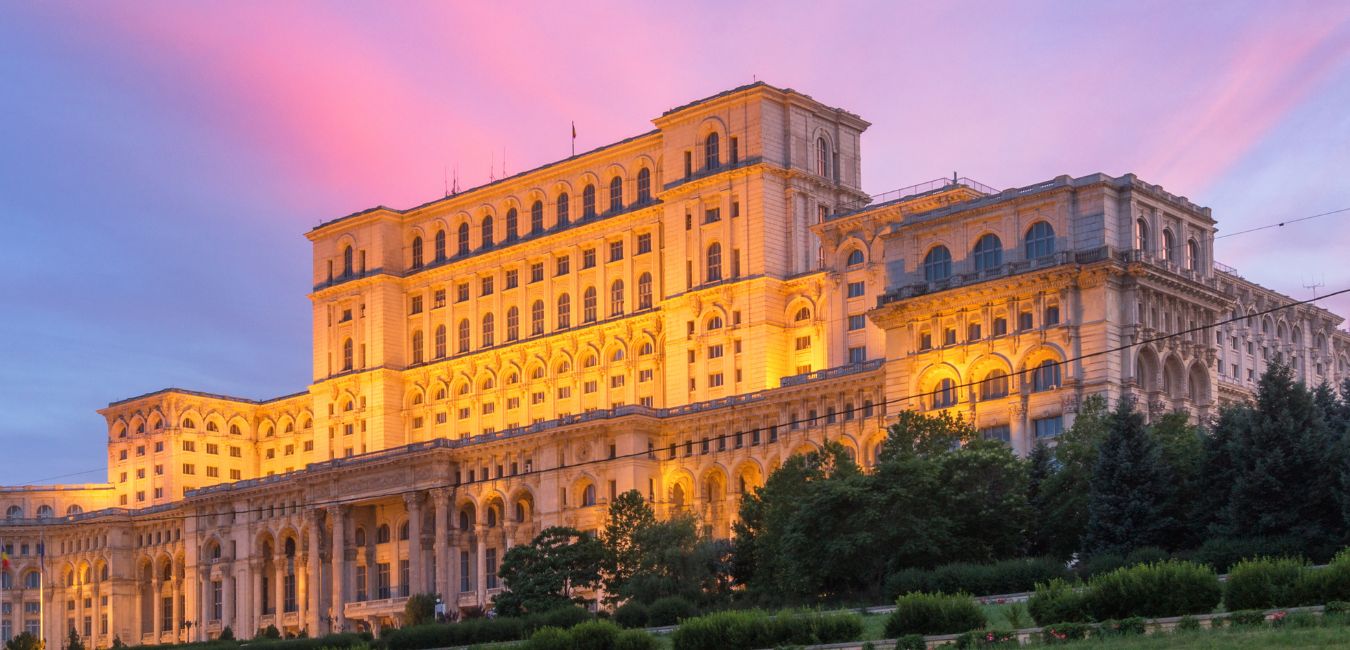
Romania has entered a new phase of political uncertainty after Prime Minister Ilie Bolojan’s government was brought down by a no-confidence vote in Parliament on Tuesday. The motion passed with 281 votes in favour and only four against, well above the threshold required to dismiss the cabinet.
The vote ends Bolojan’s short premiership less than a year after he took office and reopens Romania’s unresolved struggle to build a stable pro-Western government while managing one of the most serious fiscal crises in the European Union.
Social Democrats and the Far Right Brought Down the Government
The no-confidence motion was backed by the Social Democratic Party, Romania’s largest traditional left-wing force, and the far-right Alliance for the Union of Romanians, known as AUR. The Social Democrats had previously been part of the governing arrangement around Bolojan, but withdrew from the coalition in late April after tensions over austerity, tax increases and economic reforms.
Their decision to join forces with AUR was politically significant. Romania’s mainstream parties have usually treated the far right as an unacceptable governing partner, but the vote showed that parliamentary arithmetic can override old political taboos when a government becomes vulnerable.
Bolojan’s National Liberal Party, together with its allies, did not manage to stop the motion. According to reports from Parliament, PNL and USR lawmakers were present but did not vote, while the motion still secured enough support to remove the cabinet.
Why Bolojan Lost Power
The immediate cause of the political rupture was economic. Bolojan’s government had tried to push through strict fiscal measures to reduce Romania’s large budget deficit, including tax increases and spending restraint. These measures were presented by the government as necessary to restore confidence in public finances, but they became politically toxic for coalition partners and opposition parties alike.
Romania is under pressure due to its high budget deficit, inflation, and weak economic performance. The country also faces concerns over access to European Union recovery funds, with reforms tied to billions of euros in EU financing.
Speaking before the vote, Bolojan described the motion as false, cynical and artificial, arguing that countries facing several crises should strengthen governments rather than replace them.
Who Is Ilie Bolojan?
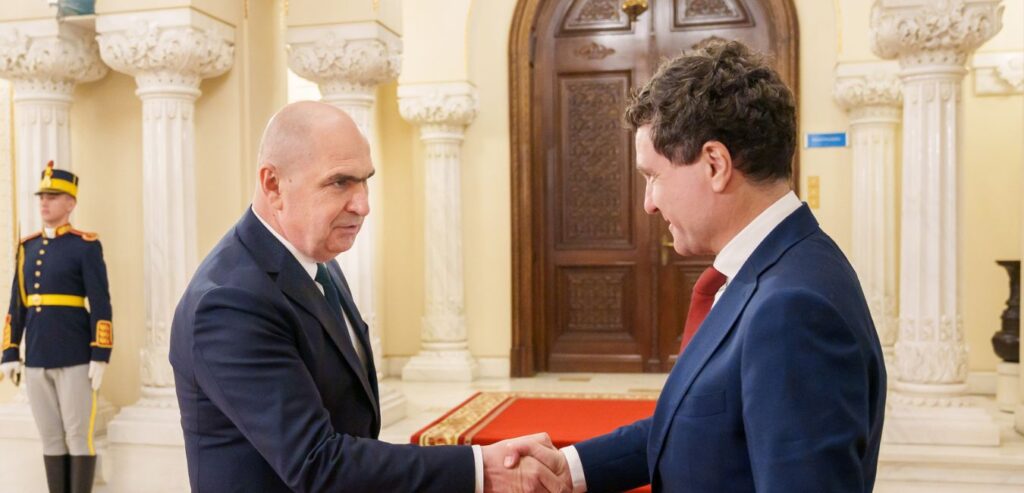
Ilie Bolojan is one of Romania’s most visible centre-right politicians. Born in Bihor County in 1969, he built his reputation first in local administration, especially as mayor of Oradea, a city often cited in Romania as an example of urban modernisation and administrative discipline.
Before becoming prime minister, Bolojan served as president of the Senate and then briefly as Romania’s acting president after Klaus Iohannis resigned. He was later appointed prime minister in 2025, after Nicușor Dan became president and sought to build a pro-European governing majority.
His political image has long been based on efficiency, cost control and administrative reform. That same profile helped him rise nationally, but it also made him vulnerable once his government moved from reform rhetoric to unpopular fiscal measures.
What Happens Next
Bolojan’s dismissed cabinet remains in office only in an interim capacity, with limited powers, until a new government is formed. President Nicușor Dan is expected to begin consultations with parliamentary parties to identify a new governing formula.
This means Romania is not heading immediately to a general election. The next regular parliamentary election is due in 2028, although the political pressure for a different configuration in Parliament is likely to grow if negotiations drag on.
The most difficult question is whether a new majority can be built without the same parties that just destroyed the previous one. The Social Democrats remain central to any parliamentary majority, but any return to power would require negotiations with parties that have just accused one another of irresponsibility, political cynicism and economic mismanagement.
Markets and Brussels Will Be Watching
The government’s fall comes at a sensitive moment for Romania’s economy. Investors are watching whether the next cabinet will continue fiscal consolidation or retreat from unpopular reforms.
The stakes are also European. Romania’s ability to access EU funds depends partly on reforms and budget discipline, while Bucharest remains an important regional actor because of its support for Ukraine and its position on NATO’s eastern flank. President Dan has sought to reassure partners that Romania will remain firmly pro-Western despite the cabinet’s collapse.
Romania Returns to Coalition Uncertainty
Bolojan’s removal does not solve Romania’s political crisis. It simply moves the crisis into a new stage.
The country now needs a prime minister who can survive Parliament, reassure financial markets, maintain Romania’s European commitments and manage a difficult fiscal correction without losing political support. That combination has proved difficult before, and Tuesday’s vote showed how fragile Romania’s governing arrangements remain.
For now, Ilie Bolojan’s premiership is over. Romania’s next government will have to be negotiated under pressure, with the economy, the EU and the rise of the far right all shaping the room for compromise.

