

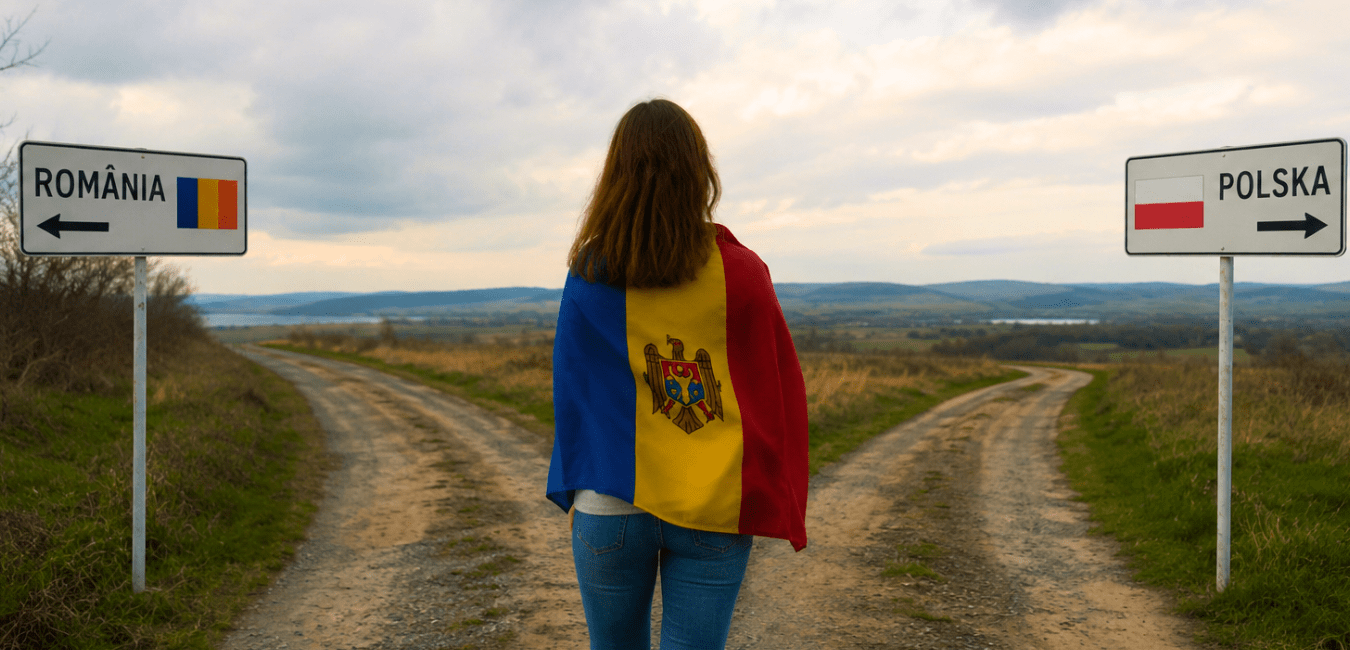
For decades, Romania assumed that its influence in the Republic of Moldova was natural, permanent and culturally guaranteed. The shared language, history, media space and emotional connection between the two countries created the impression that no other regional actor could realistically compete for influence across the Prut River.
That assumption is starting to look dangerously outdated.
A symbolic moment came during Eurovision 2026, when the Moldovan jury awarded its maximum 12 points to Poland while Romania received only 3 points. Eurovision alone does not define geopolitics, but cultural signals matter. In Eastern Europe, especially, they often reveal deeper shifts already taking place beneath the surface.
What once looked unthinkable is now becoming visible: Poland is steadily building influence in Moldova while Romania risks losing the strategic and emotional position it long considered automatic.
Poland understood that influence must be built continuously
Warsaw has spent the last few years investing in Moldova with far more discipline than many Romanian institutions seem willing to admit publicly.
The strategy is not based on nostalgia or emotional rhetoric. It is based on visibility, media presence, institutional partnerships, support for European integration, and long-term positioning.
One of the clearest examples came in 2025 and 2026, when Polish Public Television expanded the “Vot Tak. Moldova” media project specifically for the Moldovan market. Initially launched for Russian-speaking audiences in Moldova, the project later expanded into Romanian-language content designed to counter Russian narratives, promote European integration and position Poland as a democratic advocate for Moldova’s future.
This is not traditional diplomacy. It is influence architecture. And at that moment, we warned our readers that Poland outplayed Romania in Moldova via media channels.
Poland increasingly presents itself in Moldova as:
- a serious European advocate
- a regional security partner
- a pro-European voice against Russian influence
- a modern Central European success story
- a state capable of offering practical support, not just historical sentiment
This matters.
In modern geopolitics, soft power is not inherited forever. It is maintained through constant presence in the public sphere, media, culture, education, business and political symbolism.
Poland appears to understand this far better than Romania currently does.
Romania relied too much on emotional proximity
Romania’s biggest strategic mistake may have been believing that cultural closeness alone was enough to preserve influence indefinitely.
For years, Bucharest operated under the assumption that Moldova naturally gravitates toward Romania because of language and identity. But generations are changing. Media habits are changing. Political expectations are changing.
Younger Moldovans increasingly evaluate countries based on:
- economic performance
- institutional competence
- political stability
- international relevance
- opportunities and visibility
Poland projects all of these aggressively across Eastern Europe.
Romania, meanwhile, often appears hesitant, internally divided and strategically inconsistent in the Moldovan space. Now, with a president, Nicusor Dan, who looks more like a joke, as Euractiv outlined, Romania’s image is increasingly that of a weak country.
Even when Romania invests financially or politically, it frequently fails to communicate that influence effectively. Visibility matters in soft power. Narrative matters. Perception matters.
Poland has become significantly better at shaping perception.
The media battlefield is changing
The “Vot Tak. Moldova” project is particularly revealing because it demonstrates something Romania still struggles to build consistently: a dedicated narrative engine for Moldova.
The Polish-backed platform does not merely report news. It explains European integration, discusses propaganda mechanisms, promotes democratic narratives and continuously reinforces Poland’s image as a strategic ally of Moldova. The Romanian-language expansion specifically targeted Moldovan audiences in their native language while aligning Poland with Moldova’s European future.
Romania still dominates culturally in many areas, especially through language and television consumption, but dominance is no longer uncontested.
And in geopolitics, losing exclusivity is often the beginning of losing influence.
Moldova is becoming a strategically competitive territory
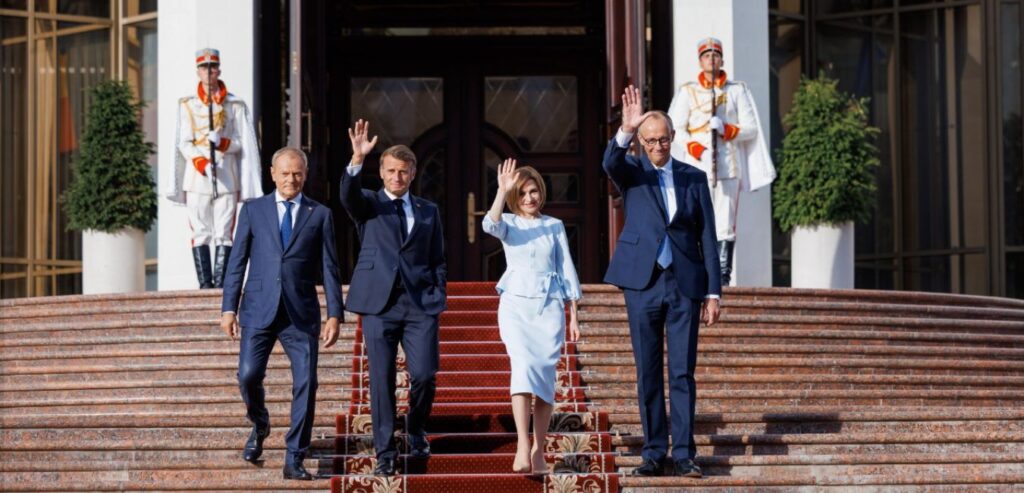
The Republic of Moldova is no longer just an emotionally symbolic territory for neighbouring states. It is now part of a larger geopolitical competition involving:
- the European Union
- Russia
- Poland
- Romania
- Ukraine
- NATO-aligned regional actors
Within this environment, countries that move faster, communicate better and appear more competent gain influence.
When Romania’s President missed the celebrations of Moldova’s Independence last year, it was clear that Romania was ordered to step back from its sister country, or that Romania’s President had taken bad grades in Geography, let alone History.
Poland’s regional rise after the war in Ukraine strengthened its credibility dramatically across Eastern Europe. Warsaw increasingly looks like a serious strategic centre in the region, while Romania still struggles to project a coherent geopolitical identity externally.
This affects perception inside Moldova as well.
Eurovision was only a symptom
The Moldovan jury’s decision at Eurovision 2026 should not be overinterpreted. Music contests are not diplomatic summits.
But symbols matter because they reflect atmospheres, emotions and public perceptions.
The reaction in Romania was intense precisely because many Romanians instinctively sensed something larger behind the result: a growing emotional and strategic distance between Bucharest and Chisinau, combined with the rise of new external influences.
Poland did not suddenly replace Romania overnight.
But it is increasingly competing for a space Romania once believed belonged exclusively to it.
That may be the real warning signal.
Poland’s Eurovision result makes Moldova’s vote even more revealing
The symbolism becomes even stronger when looking at the final ranking. Poland did not win Eurovision 2026, nor did it finish on the podium. Its entry placed only 12th in the Grand Final, with 150 points.
That makes Moldova’s 12-point jury vote for Poland even more politically and culturally significant. It was not simply a vote for the obvious winner or for the dominant song of the night. It was a maximum score awarded to a country that finished mid-table overall, while Romania, which ended the contest in third place, received only 3 points from the Moldovan jury.
Even more revealing, Moldova appears to have been the only country whose jury awarded Poland the maximum 12 points. No other national jury placed Poland first. In other words, this was not part of a broad European consensus around the Polish song, but a highly specific Moldovan choice.
That detail makes the vote harder to dismiss as a simple musical preference. Poland finished only 12th overall in the Grand Final, yet Moldova outperformed every other entry, including Romania, which finished third.
In symbolic terms, this is precisely where soft power becomes visible: not in official speeches, but in cultural reflexes, institutional preferences and the quiet ranking of who feels closer, more relevant or more strategically aligned.
Romania’s own vote made the signal even harder to ignore
The sequence of the voting made the moment even more uncomfortable. Romania announced its jury points after Moldova, and by then it was already clear that Bucharest had most likely prepared its 12 points for Chisinau. But after Moldova gave its maximum score to Poland and only 3 points to Romania, the Romanian jury did not return the symbolic gesture either. Romania awarded its 12 points to Australia, a country that is not even in Europe, while Moldova received 10 points.
That detail does not cancel the wider argument; it strengthens it. The Eurovision exchange exposed a deeper diplomatic awkwardness: Romania still expects Moldova to behave like the closest cultural partner, but when the symbolic relationship breaks down publicly, Bucharest appears reactive rather than strategically composed. Moldova looked towards Poland. Romania also looked away from Moldova.

