

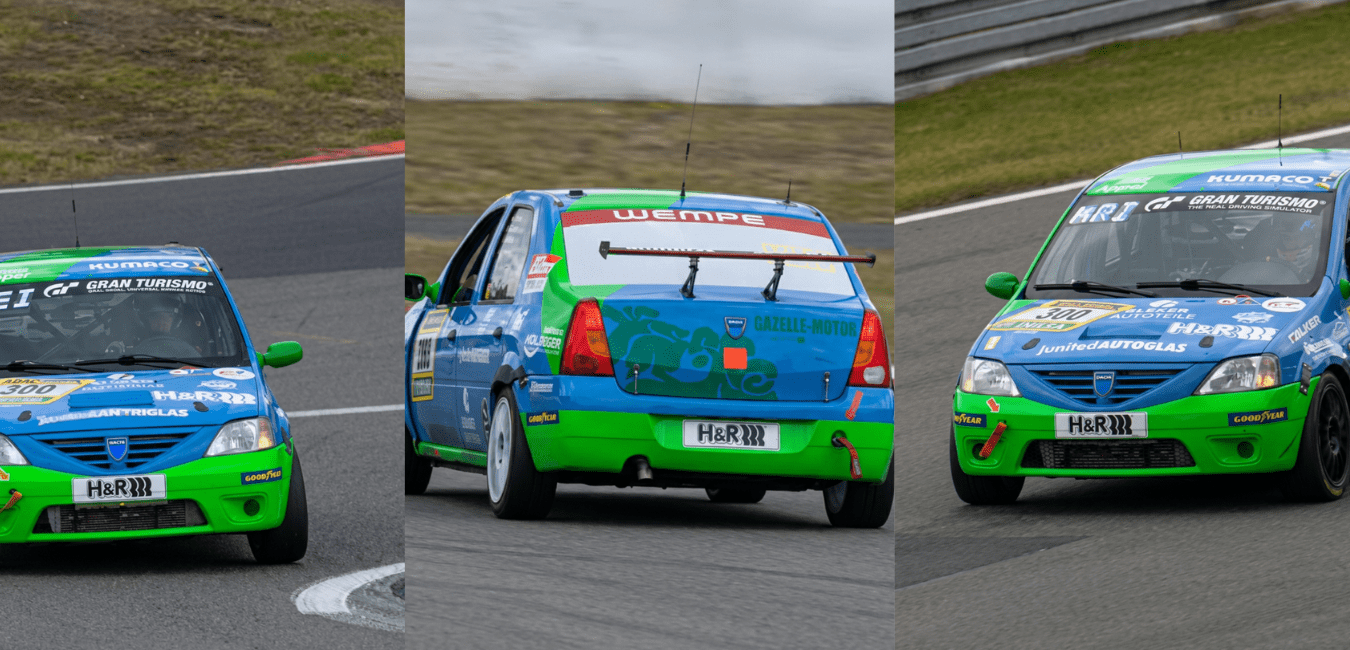
The Dacia Logan was never supposed to be the emotional star of the Nürburgring 24 Hours. Yet, among GT3 machines, factory teams, professional drivers and the global attention brought by Max Verstappen’s presence, Romania’s most recognisable everyday car became one of the most talked-about entries of the race.
The No. 300 Dacia Logan, entered by Ollis Garage Racing, completed the 2026 Nürburgring 24 Hours and became an unlikely fan favourite on one of the most demanding circuits in motorsport.
This was not a symbolic parade lap. It was the full 24-hour race at the Nürburgring Nordschleife, the legendary German circuit known as the “Green Hell”. The event brings together some of the fastest endurance racing cars in Europe, including Porsche, BMW, Mercedes-AMG, Audi and other high-performance machines built for speed, downforce and professional endurance racing.
Against that field, the Dacia Logan looked almost absurd. That is exactly why people loved it.
The Underdog That Actually Finished
The Logan finished 107th overall and sixth in its class, according to reports on the race result. In a race where simply surviving 24 hours on the Nordschleife is already an achievement, the Dacia did more than just circulate. It became a story.
The car reportedly completed 92 laps, with its fastest lap recorded at 10:22.613. Those numbers do not place it anywhere near the front of the field, but they are not the point. The point is that Logan was still there at the end.
That matters because the Nürburgring 24 Hours is brutal even for cars engineered specifically for endurance racing. Mechanical failures, contact, weather changes, oil on track, traffic and darkness all turn the race into a test of survival. Many faster and more expensive cars do not make it to the finish.
The Dacia did.
Max Verstappen Brought the Spotlight, and the Logan Won the Crowd
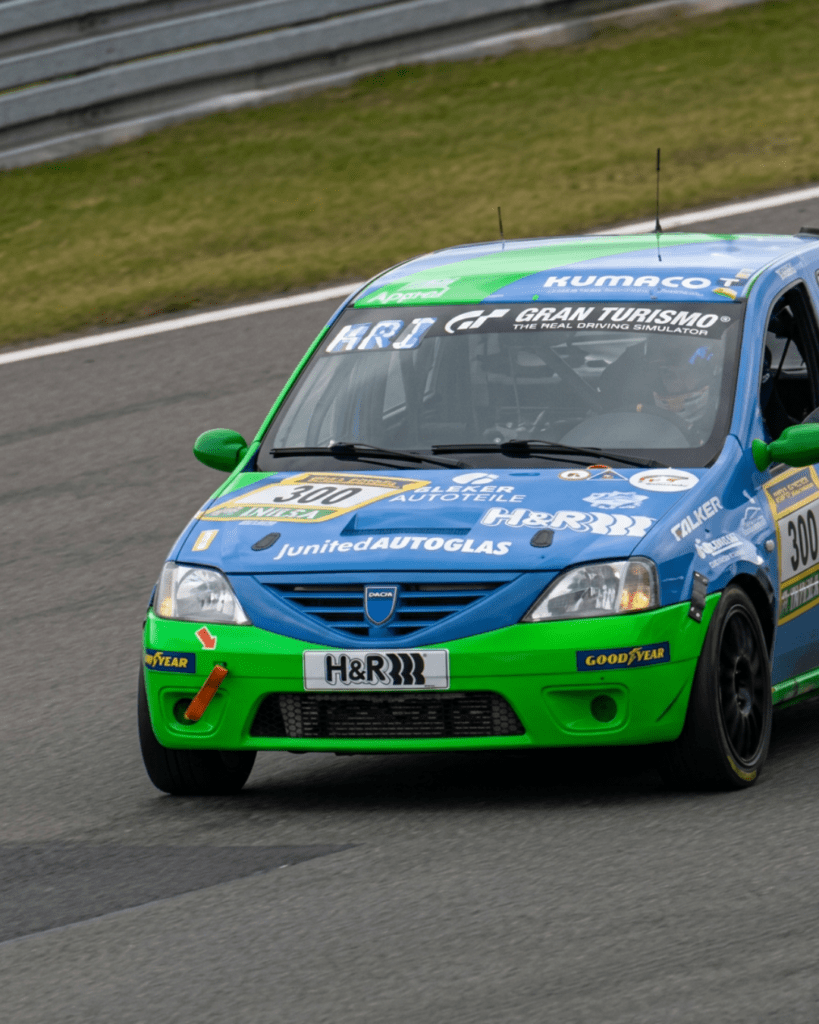
Max Verstappen’s participation helped draw international attention to the 2026 edition of the Nürburgring 24 Hours. But one of the race’s most viral contrasts came when the humble Dacia Logan shared the stage with elite machinery, including Verstappen’s Mercedes-AMG GT3.
Clips circulated online showing the Logan in traffic with much faster cars, at one point becoming part of an unlikely on-track moment involving Verstappen’s car. For fans, the image was irresistible: one of Formula One’s biggest names, one of the world’s most demanding circuits, and a Dacia Logan refusing to disappear from the story.
The symbolism wrote itself.
This was not about beating GT3 cars on performance. It was about presence. The Logan became proof that endurance racing still has room for character, humour, resilience and improbable heroes.
A Car Built for Ordinary Roads in an Extraordinary Race
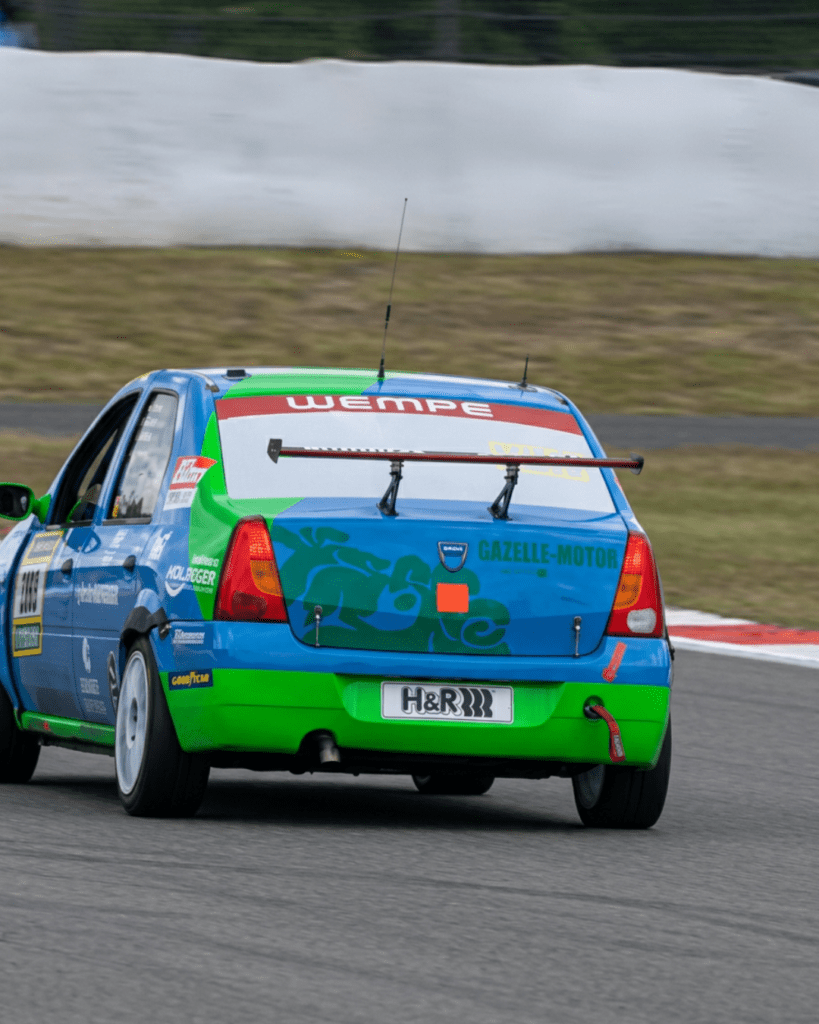
The Dacia Logan occupies a very particular place in Romanian and European automotive culture. It is not a luxury car. It is not a status car. It is not a machine designed to impress at track days.
It is the car of families, taxis, small businesses, long commutes, rural roads and practical decisions. It is associated with affordability, durability and utility. That everyday identity made its Nürburgring 24 Hours story more powerful, not less.
On a grid dominated by serious racing equipment, the Logan represented something different: the idea that motorsport is not only about money, exclusivity and prestige. Sometimes, it is also about a car that looks out of place, keeps going and earns the respect of people who understand how hard that is.
Mechanical Trouble Made the Finish Even Stronger
The Logan’s race was not clean or easy. Reports from the event described a mechanical drama, including a late issue with the left-front wheel. Yet the team managed to get the car back into the race and bring it to the finish.
That is what turned the story from amusing to genuinely admirable.
Endurance racing is not won only by the fastest car. It is survived by the cars and teams that can endure damage, solve problems, keep discipline and return to the track when the easier option would be retirement. In that sense, the Logan’s finish fits perfectly with the spirit of the Nürburgring 24 Hours.
It was not glamorous. It was not dominant. It was stubborn. And that is why it worked.
Why This Moment Matters for Romania
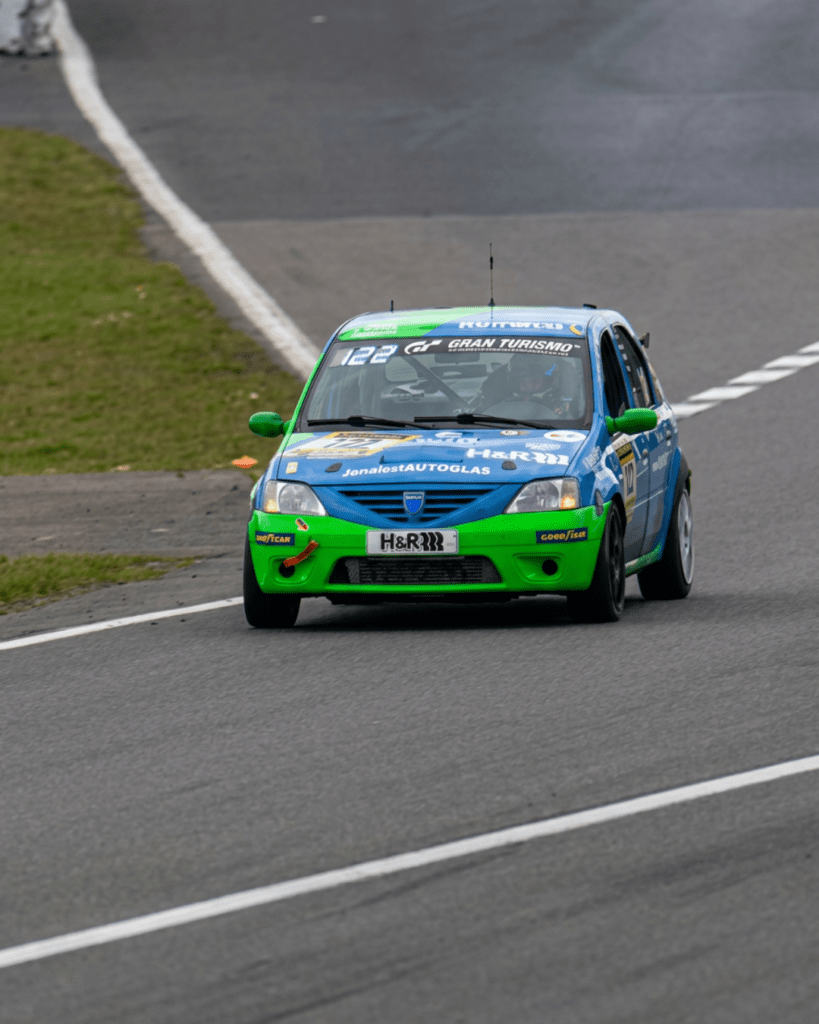
For Romania, the Dacia Logan at the Nürburgring 24 Hours is more than a motorsport curiosity. Dacia is one of the country’s most visible industrial names, and the Logan remains one of the models most closely associated with the brand’s modern international success.
Seeing that name survive one of the toughest endurance races in the world creates a form of soft-power visibility that advertising cannot easily manufacture. It is not polished corporate branding. It is better than that: an authentic underdog story that global motorsport fans noticed and shared.
The Dacia Logan did not need to win the Nürburgring 24 Hours to become one of its most memorable cars. It only needed to finish.
And it did.
In a race filled with faster, louder and more expensive machines, Romania’s everyday car delivered the kind of story motorsport still needs: imperfect, improbable, human and impossible not to applaud.

