

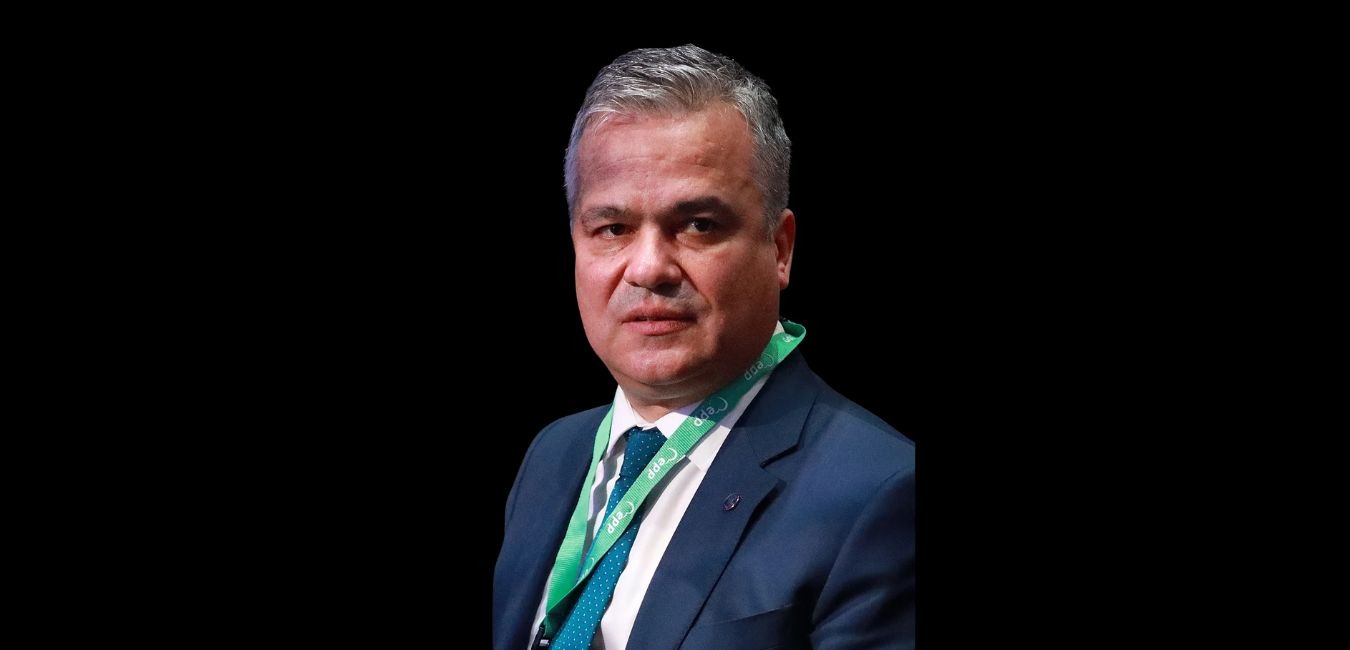
Romania’s political crisis took a new turn after Adrian Veștea was nominated to form a new government, following Eugen Tomac’s resignation from the mandate of prime minister-designate.
The move comes after days of tense negotiations in Bucharest, where Tomac struggled to secure enough parliamentary support for his proposed cabinet. His attempt to form a government faced major resistance from key political parties, most notably from the National Liberal Party, which refused to back the proposed executive.
Veștea now becomes the latest political figure tasked with finding a governing formula in a fragmented Parliament. A senior Liberal politician and former Minister of Development, Public Works and Administration, Veștea is seen as a figure with administrative experience and connections inside the party structure.
His nomination signals a shift from the technocratic formula initially associated with Tomac toward a more politically anchored attempt to rebuild a governing majority. The new prime minister-designate will have to move quickly to secure support, define the cabinet structure, and present a programme capable of passing the investiture vote in Parliament.
Who is Adrian Veștea?
Adrian Veștea is one of the National Liberal Party’s strongest administrative figures, with a political career built far from Bucharest’s television studios but close to the machinery of local power. He served as mayor of Râșnov, later became president of the Brașov County Council, and was appointed Minister of Development, Public Works and Administration in the Ciolacu Government. His rise is tied to local administration, infrastructure, county-level negotiations and the internal networks of the PNL. In political terms, Veștea is not the symbol of a clean technocratic restart, but of a return to the practical, transactional side of Romanian politics.
Romania has been without a stable governing formula since the collapse of the previous executive, a crisis that has placed additional pressure on public finances, reforms and relations with European partners. The lack of a functional majority has made every nomination politically fragile, with parties weighing both the immediate need for a government and the electoral costs of supporting one.
Also, Veștea is one of the internal political opponents of the former Prime Minister, Ilie Bolojan, the head of the Liberal Party, PNL. The social media post by Ilie Bolojan after the nomination clearly states that he, as a political party leader, was not informed of the nomination in advance, which contradicts the principles of collaboration with President Nicusor Dan.
Tomac’s Resignation
Tomac’s resignation ends a short-lived attempt to form a cabinet outside the direct control of the major parliamentary parties. Although presented as a solution to the political deadlock, his proposed government failed to gather the broad support needed to survive a parliamentary vote.
Veștea’s chances will now depend on whether the main parties are willing to return to negotiations and accept a cabinet built around a more conventional political compromise. The nomination also places the National Liberal Party back at the centre of the crisis, after days of internal tensions over whether to support or block the previous governing formula.
The coming days will be decisive. If Veștea succeeds in building a majority, Romania could move toward a new government after weeks of instability. If he fails, the political crisis may deepen further, increasing pressure on the president and parliamentary parties to find a new solution.

