

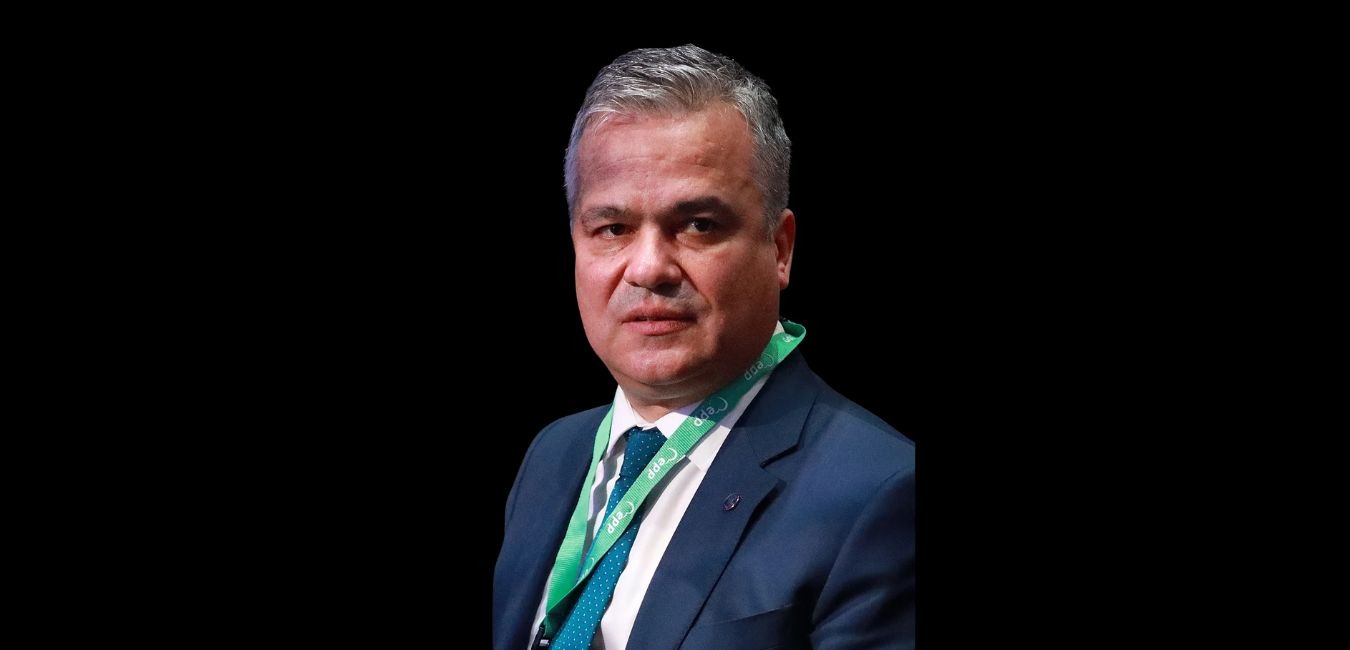
Adrian Veștea, a senior figure in Romania’s National Liberal Party, has been nominated to form Romania’s new government after Eugen Tomac returned the mandate of prime minister-designate. His nomination marks a new stage in the country’s political crisis and moves the government-formation process from the attempted technocratic formula associated with Tomac toward a more conventional political solution.
Veștea is not a newcomer to public office. His career has been built over three decades inside the National Liberal Party, local administration, county leadership and central government. His political profile is strongly connected to Brașov County, infrastructure projects, local development and the administrative networks of the PNL.
Also, Veștea is one of the internal political opponents of the former Prime Minister, Ilie Bolojan, the head of the Liberal Party, PNL. The social media post by Ilie Bolojan clearly states that he, as a political party leader, was not informed of this nomination beforehand, which contradicts the principles of collaboration with President Nicusor Dan.
1994: Adrian Veștea Joins the National Liberal Party
Adrian Ioan Veștea entered the National Liberal Party in 1994. This early affiliation places him among the long-serving Liberal politicians who built their careers inside the party rather than moving between political platforms.
His later rise through local and county administration would remain closely connected to the PNL’s territorial structures, especially in Brașov County.
2004–2016: Mayor of Râșnov for Three Terms
Veștea’s first major executive role came in 2004, when he became mayor of Râșnov, a town in Brașov County.
He served as mayor for three consecutive terms, between 2004 and 2016. During this period, he built his image as a local administrator and promoted Râșnov’s development as a tourist destination.
This stage shaped his political identity. Veștea was not built primarily as a national television figure or parliamentary speaker, but as a local executive responsible for projects, budgets, local services and community development.
2016: President of Brașov County Council
In 2016, Adrian Veștea became president of the Brașov County Council. This moved him from local town administration to county-level leadership, giving him a wider political and administrative role.
As president of the County Council, Veștea became associated with regional infrastructure, public investment and the coordination of development projects across Brașov County.
This position also increased his influence inside the PNL. County council presidents are important figures in Romanian politics because they connect local communities, mayors, party branches and central government.
2016–2020: Brașov Airport Becomes Central to His Political Profile
During his first mandate as president of the Brașov County Council, Veștea became strongly associated with Brașov-Ghimbav International Airport.
Brașov-Ghimbav International Airport became one of the most important infrastructure projects associated with Veștea’s county-level career. Romanian media previously described it as the first airport built from scratch in Romania after 1989.
For Veștea, the airport became a political symbol. It reinforced his image as an administrative politician focused on infrastructure, regional development and long-term local projects.
2020: Second Mandate at Brașov County Council
In 2020, Adrian Veștea won another mandate as president of the Brașov County Council.
This confirmed his position as one of the strongest Liberal figures in Brașov County and consolidated his administrative profile. By this point, his political identity was already clear: local power, county leadership, infrastructure and party organisation.
His influence was no longer limited to Râșnov or Brașov. Through his county-level role and party position, he became part of the wider Liberal administrative network.
2023: Minister of Development, Public Works and Administration
In June 2023, Adrian Veștea entered central government as Minister of Development, Public Works and Administration.
This ministry is one of the most politically important portfolios in Romania because it is directly connected to local authorities, public works, infrastructure, administrative development and funding programmes for communities.
For any party, the Ministry of Development is strategically important. It deals directly with mayors, county councils and local projects. It is a ministry that connects the central government with local power.
Veștea’s appointment to that portfolio was therefore consistent with his profile: a local administration politician placed in charge of a ministry built around local administration.
His time at the ministry reinforced his role as a political operator connected to mayors, county councils, public investment and development projects.
2024: Return to Brașov County Council
In 2024, Veștea resigned from the Ministry of Development after winning a new mandate as president of the Brașov County Council. President Klaus Iohannis formally took note of his resignation on November 20, 2024.
This move showed that his political centre of gravity remained in Brașov and the local administration. Even after serving in the national government, Veștea returned to the county-level executive position that had defined much of his career.
The return also kept him close to the Liberal Party’s local power structure, especially the network of mayors and county leaders that often plays a decisive role in national political negotiations.
2025: European Committee of the Regions
In 2025, Veștea became a member of the European Committee of the Regions, representing Romania as president of the Brașov County Council.
This added a European institutional layer to his administrative profile. The Committee of the Regions is built around local and regional authorities, making it a natural fit for a politician whose career has been shaped by county administration and regional development.
2026: First Vice-President of PNL
By 2026, Adrian Veștea was listed among the first vice-presidents of the National Liberal Party.
This position placed him inside the party’s central leadership and gave him political relevance beyond Brașov County. It also made his nomination to form the government more than a personal appointment.
It became a signal that the Liberal Party’s administrative wing was being brought directly into the centre of the political crisis.
Veștea has also been publicly presented as president of the National Union of County Councils, a role that reinforces his connection to Romania’s county-level administrative network.
2026: Adrian Veștea Nominated to Form Romania’s Government
In June 2026, after Eugen Tomac returned the mandate of prime minister-designate, Adrian Veștea was nominated to form Romania’s new government.
The nomination changed the nature of the government-formation attempt. Tomac’s nomination had been presented as an unusual solution, with a technocratic profile and a certain distance from the main parliamentary parties.
Veștea’s nomination is different. It signals a return to political negotiation, party structures and administrative power. Instead of a government built mainly around the idea of technocratic independence, the Veștea formula points toward a more traditional governing compromise.
Why Adrian Veștea’s Nomination Matters
Adrian Veștea’s nomination matters because it shows how Romania’s political crisis has evolved.
The Tomac formula failed to gather the necessary political support. That attempt depended on the assumption that parties would accept a government beyond their direct control. Once that became impossible, the president moved toward a figure with stronger ties to party machinery and local administration.
Veștea represents the practical side of Romanian politics: county councils, mayors, local projects, development funds and party negotiations. This may not create the image of a clean technocratic restart, but it may offer a more realistic path to parliamentary support.
What Kind of Prime Minister Would Adrian Veștea Be?
If Adrian Veștea succeeds in forming a government, his premiership would likely be defined by administrative pragmatism.
His strengths are clear: experience in local administration, knowledge of development mechanisms, connections with mayors and county councils, and a senior position inside PNL.
His weaknesses are also visible. He is not a national political star and does not have the public profile of leaders such as Ilie Bolojan. His nomination may also be criticised as a return to party machinery after the failure of the Tomac experiment.
But this is exactly what makes his nomination politically relevant. Romania’s crisis has reached a point where functionality may matter more than image. The country needs a government that can pass legislation through Parliament, manage public finances, negotiate with European partners, and keep institutions functioning.
What Happens Next
Adrian Veștea now has to build the parliamentary majority that Eugen Tomac could not secure.
That means negotiating with political parties, defining the cabinet structure, preparing a government programme and convincing enough lawmakers that a Veștea Government is preferable to continued instability.
His chances depend not only on his own profile, but on whether PNL, PSD, UDMR, minorities and other parliamentary actors are willing to accept a new compromise.
The nomination does not end Romania’s political crisis. It opens a new stage of it.
If Veștea succeeds, Romania could move toward a more conventional political government after weeks of uncertainty. If he fails, the crisis will deepen again, increasing pressure on President Nicușor Dan and the parliamentary parties to find another solution.
For now, Veștea’s nomination tells a clear story about Romanian politics: when technocratic experiments fail, power returns to the networks that know how to count votes, manage local interests and negotiate survival.

