

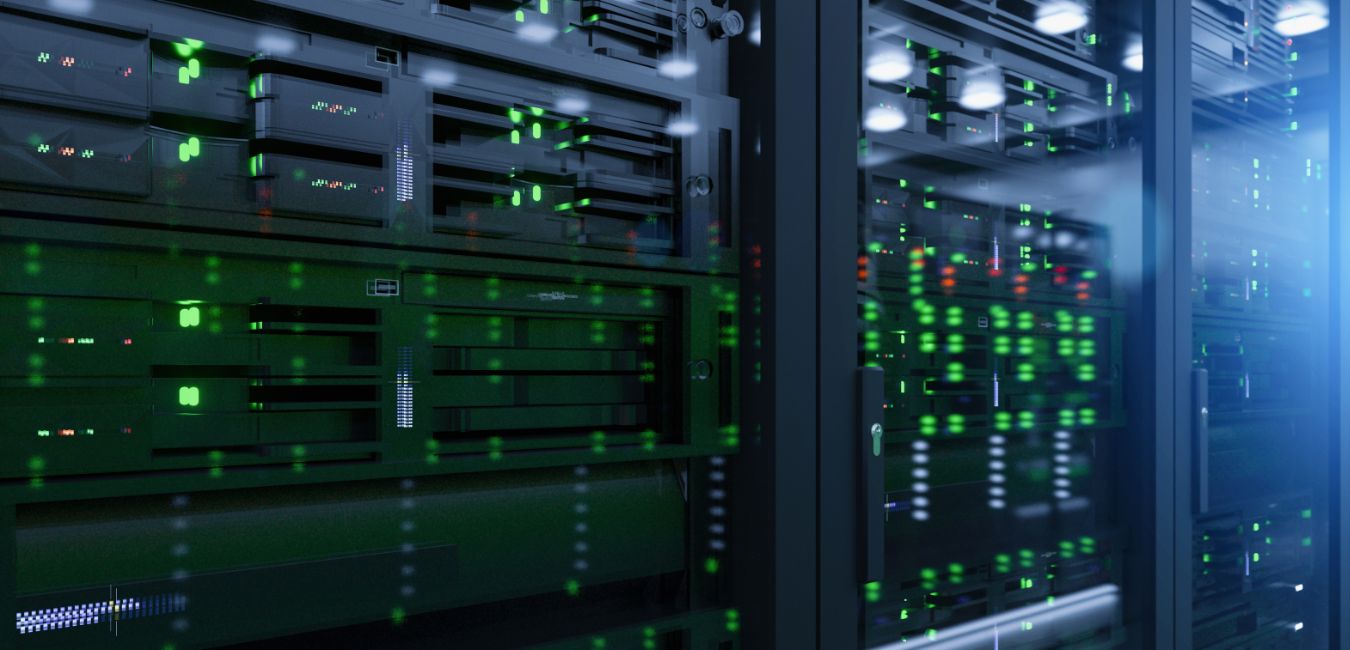
Romania has officially launched the selection process for the consortium leader to develop the Black Sea AI Gigafactory, a project the government has presented as one of the country’s largest artificial intelligence infrastructure ambitions to date.
The announcement, made by Energy Minister Bogdan Ivan, signals a shift from generic political talk about innovation to something far more concrete: compute capacity, energy infrastructure, large-scale processing power and long-term strategic positioning in the AI race. If the project moves beyond the usual Romanian pattern of delays and bureaucracy, the Black Sea AI Gigafactory in Romania could become one of the most important technology investments in the region.
If anyone still doubts that AI will replace humans, this is a wake-up moment.
What is the Black Sea AI Gigafactory in Romania
The Black Sea AI Gigafactory in Romania is being developed as a large-scale artificial intelligence compute infrastructure project, designed to give Romania a stronger position in the regional and European AI market.
According to the official announcement, the first phase is expected to begin with around 20,000 GPUs, with the possibility of scaling to more than 100,000 depending on market demand and the pace of implementation. That is the detail that changes the entire conversation.
This is no longer about Romania wanting to appear modern or digitally ambitious. The Black Sea AI Gigafactory in Romania is about the physical backbone of AI: processors, power, cooling, security, financing and the capacity to run advanced artificial intelligence systems at scale.
Why the Black Sea AI Gigafactory matters for Romania
The Black Sea AI Gigafactory matters because the real AI race is no longer just about apps, interfaces or public enthusiasm. It is about who controls infrastructure.
Countries that can host serious AI compute capacity will have a stronger position in industrial automation, defence modelling, cybersecurity, logistics, research, data-intensive public systems and next-generation business tools. Countries that cannot will remain dependent on foreign infrastructure, foreign cloud providers and external strategic priorities.
That is why the Black Sea AI Gigafactory in Romania is more than a technology headline. It is an attempt to give Romania a role in the infrastructure layer of artificial intelligence, where real power is increasingly concentrated.
For readers interested in how AI infrastructure connects to the wider battle between major systems, Replace Humans has also explored the competitive model landscape in detail through its analysis of the best AI models in 2026.
Romania is betting on AI infrastructure, not just AI rhetoric
For years, many European governments have spoken about artificial intelligence as though it were mainly a branding opportunity. Romania is now trying to push the discussion into more serious territory.
The Black Sea AI Gigafactory in Romania suggests that at least some policymakers understand a basic truth: AI at scale depends on industrial capacity. It depends on data centres, hardware, cooling systems, stable energy and operational reliability.
That makes this project structurally more important than the usual announcements about innovation labs, start-up hubs or digital strategy documents. Those can create visibility. They do not create infrastructure.
A working Black Sea AI Gigafactory would.
Why energy is central to the Black Sea AI Gigafactory in Romania
Large GPU clusters require major electricity supply, robust cooling systems and long-term operating stability. That is one reason the Black Sea AI Gigafactory in Romania is so significant under the Ministry of Energy’s authority. The government is not framing the initiative as a simple software ecosystem project but as an infrastructure build directly tied to national energy capacity and industrial planning.
This is one of the few parts of the Romanian AI vision that sounds grounded in reality. Without power, there is no large-scale computing. Without large-scale compute, there is no credible AI infrastructure strategy.
The Black Sea AI Gigafactory in Romania, therefore, sits at the intersection of technology, energy and national competitiveness.
The project now enters a more concrete phase
The government has launched the Expression of Interest procedure to identify the consortium leader that will take the project forward. Interested operators have until June 14, 2026, at 17:00 to submit documentation.
That deadline gives the project more substance than a typical political statement. It places the Black Sea AI Gigafactory in Romania into a measurable process, where the next stage will depend on whether the government can attract a credible lead partner with the technical, financial and operational capacity required for an investment of this scale.
The biggest risk is execution
This is where the real test begins. Announcing a strategic AI project is easy; building one is not.
Romania has often pursued ambitious projects that later faltered due to bureaucracy, administrative drift, procurement complications, or political turnover. The Black Sea AI Gigafactory in Romania will be judged less by the size of the promise and more by whether the state can actually deliver.
The project will need credible partners, continuity of vision, robust governance, integration with long-term energy planning, and sufficient institutional discipline to withstand shifts in political attention.
Without that, even the most impressive GPU target remains only a number in a press statement.
That is why the Black Sea AI Gigafactory is not yet proof that Romania has entered the top tier of European AI development. It is proof that Romania wants to try.
Black Sea AI Gigafactory in Romania could reshape the country’s AI future
If the Black Sea AI Gigafactory in Romania moves forward, it could become the country’s most important AI infrastructure project and one of the most ambitious technology bets in Eastern Europe.
It would not instantly turn Romania into an AI superpower. But it would give the country something far more valuable than hype: infrastructure relevance.
That matters because the future of AI will not be decided only by who builds the smartest products. It will also be decided by who owns the capacity to train, run and scale them.
The Black Sea AI Gigafactory in Romania is still only a project. But it is now live, and that alone makes it one of the most important AI stories in Romania right now.

