

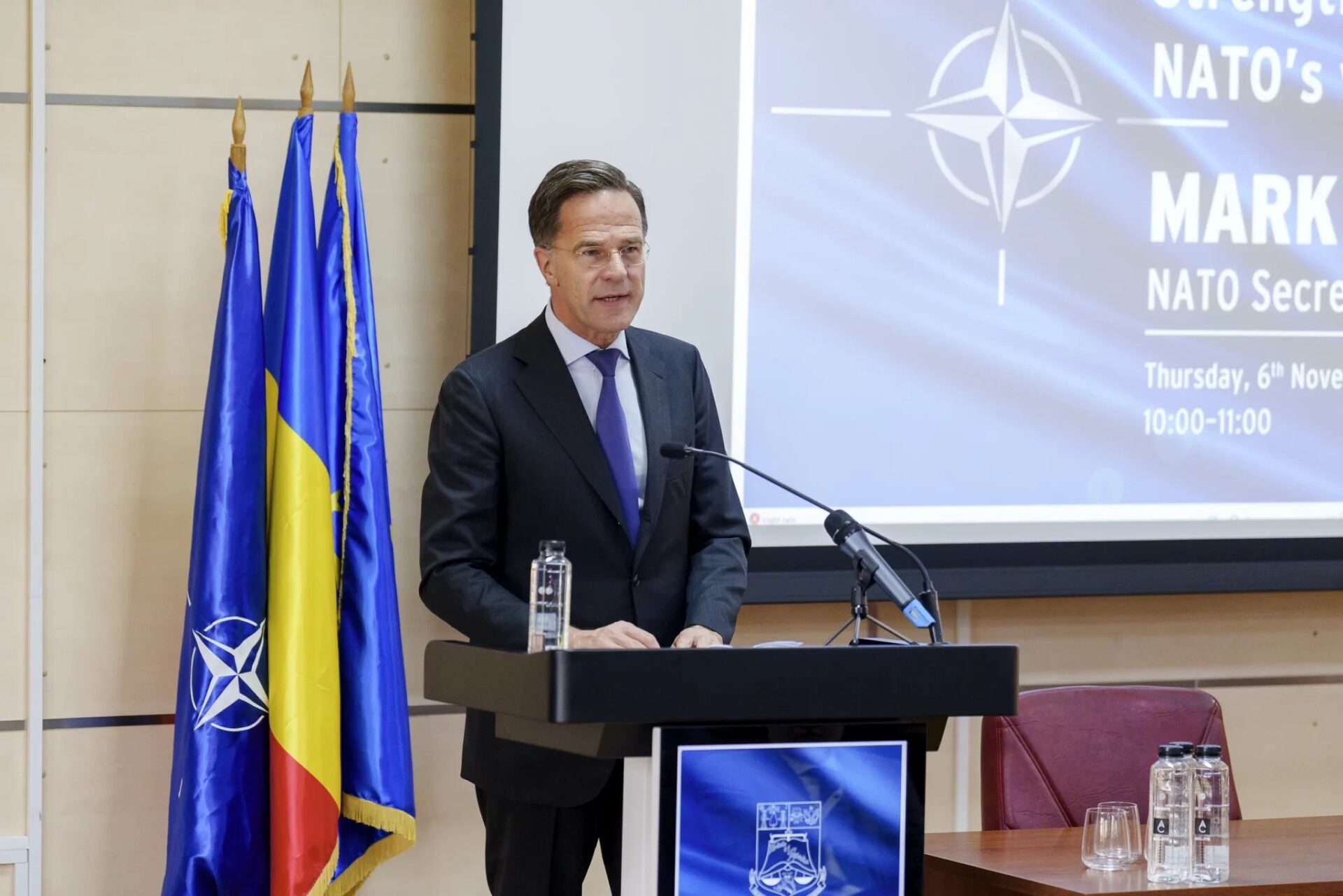
NATO Secretary General Mark Rutte made his first official visit to Romania since assuming his role, underscoring NATO’s unwavering commitment to the country and its strategic importance on the Alliance’s Eastern Flank. The two-day visit, held on November 5 and 6, highlighted Romania’s growing role in regional security, defence modernisation, and NATO’s long-term readiness.
Notably, this visit came right after the US Troops had a partial withdrawal from Romania; from this perspective alone, the visit served as an assurance that NATO would support all its allies, especially those on the Eastern flank, independently of the decisions made by the US or any other member state.
Meeting with Romanian Leadership
Mark Rutte met with key Romanian officials, including President Nicușor Dan, Prime Minister Ilie Bolojan, Senate President Mircea Abrudean, and Chamber of Deputies Speaker Sorin Grindeanu. At Cotroceni Palace, Rutte and President Dan held a joint press conference, emphasising that Romania is not only deeply invested in NATO but that NATO is equally invested in Romania’s security and stability.
Rutte reassured the public and allies alike amid concerns over recent changes in the United States’ troop presence in Romania, framing these as routine adjustments rather than a weakening of NATO’s resolve. “If this country were under attack, it would be 31 other nations coming to the rescue of Romania. This is how NATO works. This makes us absolutely unbeatable,” Rutte stated.
President Dan echoed this sentiment, highlighting Romania’s commitment to modernising its military capabilities within the framework of the 2024-2030 National Strategy for the Defence Industry and increasing defence spending in line with NATO targets.
Focus on Regional Security and Defence Industry Innovation
During his visit, Rutte attended the NATO Industry Forum 2025 held in Bucharest, a premier event designed to foster dialogue between defence officials, industry leaders, and innovators from 26 NATO member and partner countries. The forum’s theme, “Rearming NATO – Innovate, Accelerate, Sustain,” focused on boosting NATO’s defence capabilities through partnerships with the commercial sector, particularly in dual-use technologies and emerging systems such as counter-drone measures.
Rutte stressed the importance of investing in a robust defence industrial base to meet ambitious NATO goals, including raising defence spending to 5% of GDP by 2035 for member states. He spoke about the need to secure technology, artillery, and ammunition to guarantee NATO’s defence of its territory.
Strengthening the Eastern Flank and Black Sea Security
Romania’s leadership role in Black Sea security was prominently acknowledged. Rutte highlighted NATO’s Eastern Sentry initiative, aimed at reinforcing the entire Eastern Flank with flexible capabilities in air, land, and sea, particularly in detecting and countering hybrid threats, such as drone incursions.
Romania’s hosting of the French-led Forward Land Forces and the extensive multinational exercise Dacian Fall, which scales NATO presence from a battalion to a brigade, were cited as tangible proof of the Alliance’s readiness in the region.
Engagement with Romanian Youth and Academic Community
As part of his visit, Mark Rutte also engaged with university students at the University of Bucharest. This interaction underscored NATO’s commitment to long-term strategic readiness and cooperation with the next generation in facing future security challenges.
Mark Rutte’s visit to Bucharest reinforced Romania’s pivotal position within NATO amid ongoing regional tensions, particularly Russia’s aggression in Ukraine. The visit sent a clear message of solidarity and strategic partnership, highlighting shared commitments to collective defence and defence industry innovation.
Romania stands as a steadfast ally with a growing role in European security architecture, supported by NATO’s enduring presence and cooperation.

