

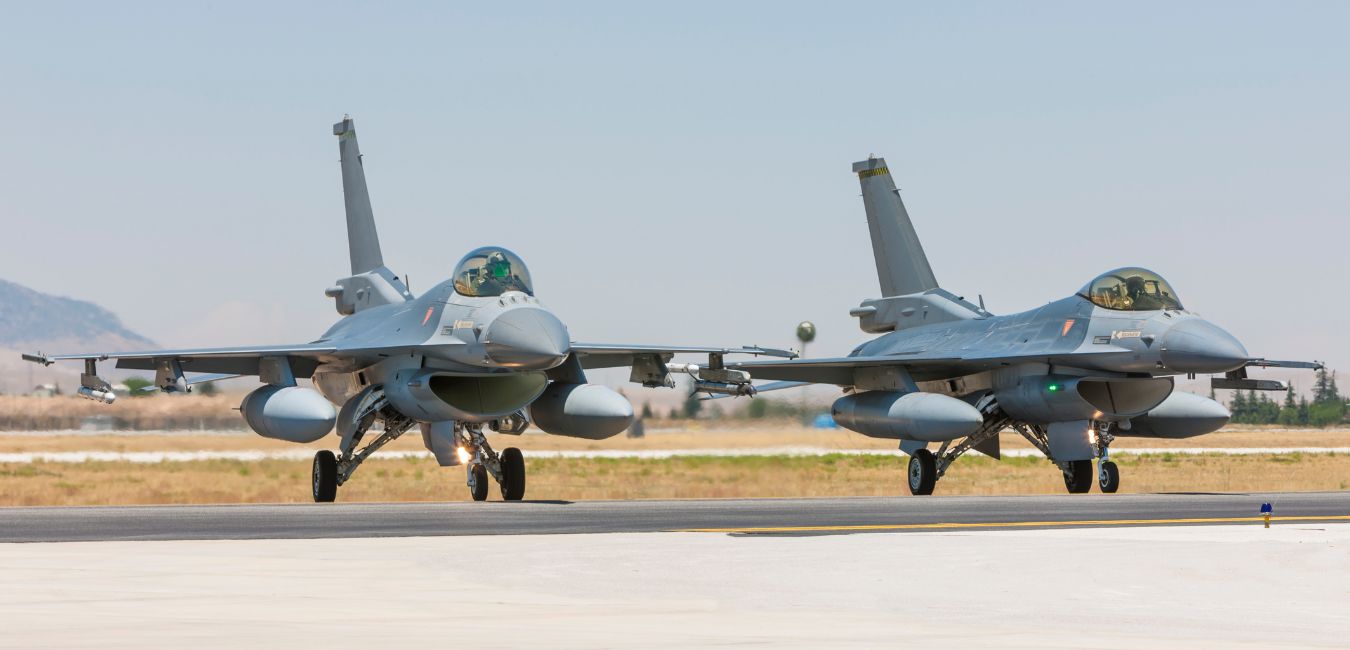
Romania has approved a United States request to temporarily deploy defensive military assets on its territory for up to 90 days, as tensions linked to Iran intensify in the broader Middle East. The decision was cleared on March 11, 2026, by the Supreme Council of National Defence, under President Nicușor Dan, with parliamentary approval expected to follow.
The move marks a notable shift in regional security dynamics after concerns emerged in late 2025 about a partial reduction in the US military presence in Romania. It also reinforces Bucharest’s role as a strategic pillar on NATO’s eastern flank at a moment when instability in both the Black Sea region and the Middle East is feeding broader security anxiety across Europe.
Deveselu Again Becomes a Strategic Focus
At the centre of the new deployment is the Deveselu military base, where the US-operated Aegis Ashore missile defence system remains one of the most important components of NATO’s regional defensive architecture. Romanian authorities signalled that the current approval covers non-kinetic, defensive support equipment, including satellite communications systems linked to Deveselu and additional surveillance and monitoring capabilities.
According to the official framing from Bucharest, the deployment does not involve offensive weaponry, ammunition, or preparations for launching attacks from Romanian territory. President Nicușor Dan emphasised that the assets being positioned in Romania are defensive in nature and intended to support monitoring, coordination, and logistical functions rather than combat operations.
This distinction is politically important. In a region already shaped by the war in Ukraine, Russian pressure in the Black Sea, and mounting fears over the wider consequences of a confrontation involving Iran, Romanian authorities are clearly trying to avoid any perception that the country is becoming an operational launch platform for military action in the Middle East.
Mihail Kogălniceanu and Câmpia Turzii Gain New Relevance
Beyond Deveselu, the deployment will also involve the military facilities at Mihail Kogălniceanu and Câmpia Turzii. These locations are expected to host support infrastructure such as refuelling aircraft, intelligence-gathering drones, and monitoring systems designed to assist broader US operational awareness.
The emphasis, at least publicly, remains on logistics, surveillance, and defensive coordination. Even so, the decision highlights the enduring military importance of Romanian territory for American and NATO planning. Romania’s geographic position, with direct access to the Black Sea and proximity to Ukraine, continues to make it a critical platform for regional force posture and contingency management.
From Partial US Drawdown to Strategic Reengagement
The decision comes only months after Washington reduced part of its military footprint in Romania. In late 2025, around 1,000 US troops were withdrawn from Mihail Kogălniceanu as part of a broader recalibration associated with President Donald Trump’s renewed “America First” doctrine, which prioritised domestic border issues and a larger strategic focus on the Indo-Pacific.
That partial pullback triggered concern among analysts and allied officials who viewed it as a risky signal at a time when Russia’s war against Ukraine remained unresolved and regional deterrence depended heavily on visible American commitment. Although a significant US and NATO presence remained in place, the reduction was interpreted by many as a moment of strategic uncertainty for the eastern flank.
The latest approval from Bucharest now points in the opposite direction. With several hundred additional US personnel expected to rotate into Romania as part of the temporary deployment, the country is once again serving as a central support node in a broader American security response.
Romania’s Delicate Security Calculation
For Bucharest, the decision reflects a difficult balancing act. Romania shares a long border with Ukraine, remains exposed to Black Sea instability, and must also consider the economic consequences of any deeper Middle East crisis, especially through oil price shocks, shipping risks, and broader market turbulence.
By approving the deployment while insisting on its strictly defensive and non-offensive character, Romanian leaders appear to be pursuing a dual objective. On one hand, they are reaffirming their reliability toward the United States and NATO. On the other hand, they are trying to contain domestic and regional fears that Romania could be drawn directly into a conflict far from its borders.
That balance may prove increasingly difficult to maintain if the security environment deteriorates further. Even without offensive assets on Romanian soil, any expansion of US operational support infrastructure in the country will inevitably attract political scrutiny and likely renewed attention from both Moscow and Tehran.
A Reminder of Romania’s Strategic Weight
The episode is also a reminder that Romania’s military relevance has increased, not declined, despite recurring debates over burden-sharing and American commitment in Europe. Whether in relation to Ukraine, Black Sea security, missile defence, or logistics for broader allied operations, Romania has become one of the key territories through which NATO’s eastern strategy is sustained.
For now, Bucharest is drawing a clear line: support, yes; offensive launching ground, no. But the speed of the approval and the scale of the infrastructure involved show that Romania is once again at the centre of a fast-moving geopolitical moment.
In a volatile regional landscape shaped by Russian aggression, Iranian escalation, and uncertainty over long-term American posture, Romania is not merely hosting assets. It is signalling that, despite recent doubts, it remains one of the alliance’s most dependable strategic anchors in Eastern Europe.

